(970) 927-9668

The Pull of the Plate presented by Ann Korologos Gallery celebrates the artistry, craftsmanship and experimentation at the heart of printmaking. The exhibition explores how artists transform carved surfaces, etched plates and layered inks into works that feel both deeply technical and profoundly expressive. Printmakers Sherrie York, Leon Loughridge, Paula Schuette Kraemer, Joel Ostlind and Marcia Weese manipulate plate, ink and pressure to create works where process becomes part of the story itself.
While painting often records a direct gesture, printmaking introduces an additional conversation between artist, surface and transfer. Every mark must pass through a matrix — a carved block, etched plate or prepared surface — before arriving on paper. The result is a medium that embraces both intention and surprise.
Below is a look at several printmaking approaches represented by artists associated with The Pull of the Plate and the unique visual language each process creates.
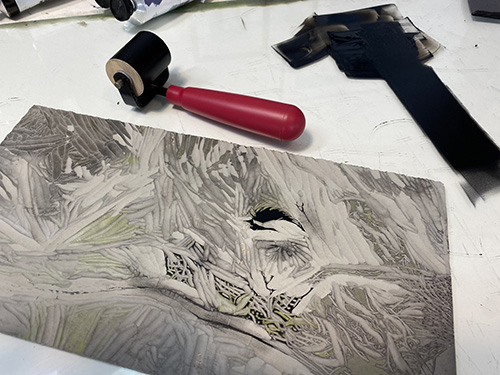
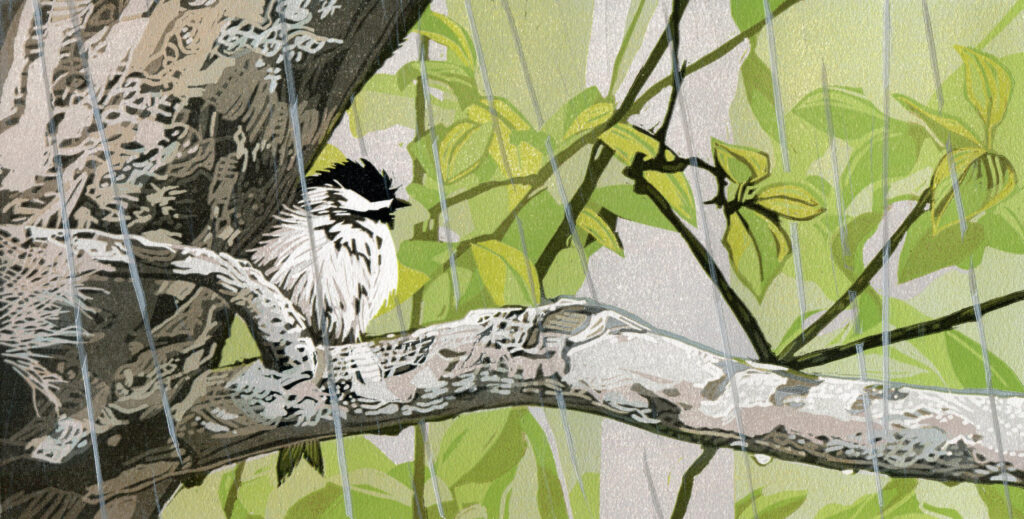
For Sherrie York, reduction linocut offers a balance of precision and risk. In this process, an artist carves an image into a linoleum block and prints one color at a time. After each pass through the press, more material is carved away before the next color layer is added.
Because portions of the block are permanently removed at every stage, the process cannot be reversed. Printmakers often refer to reduction linocuts as a “suicide print” process because the original block is gradually destroyed as the image develops. The result is rich color layering and bold graphic structure. Works by York demonstrate how a technically rigid process can still produce softness, movement and atmosphere.
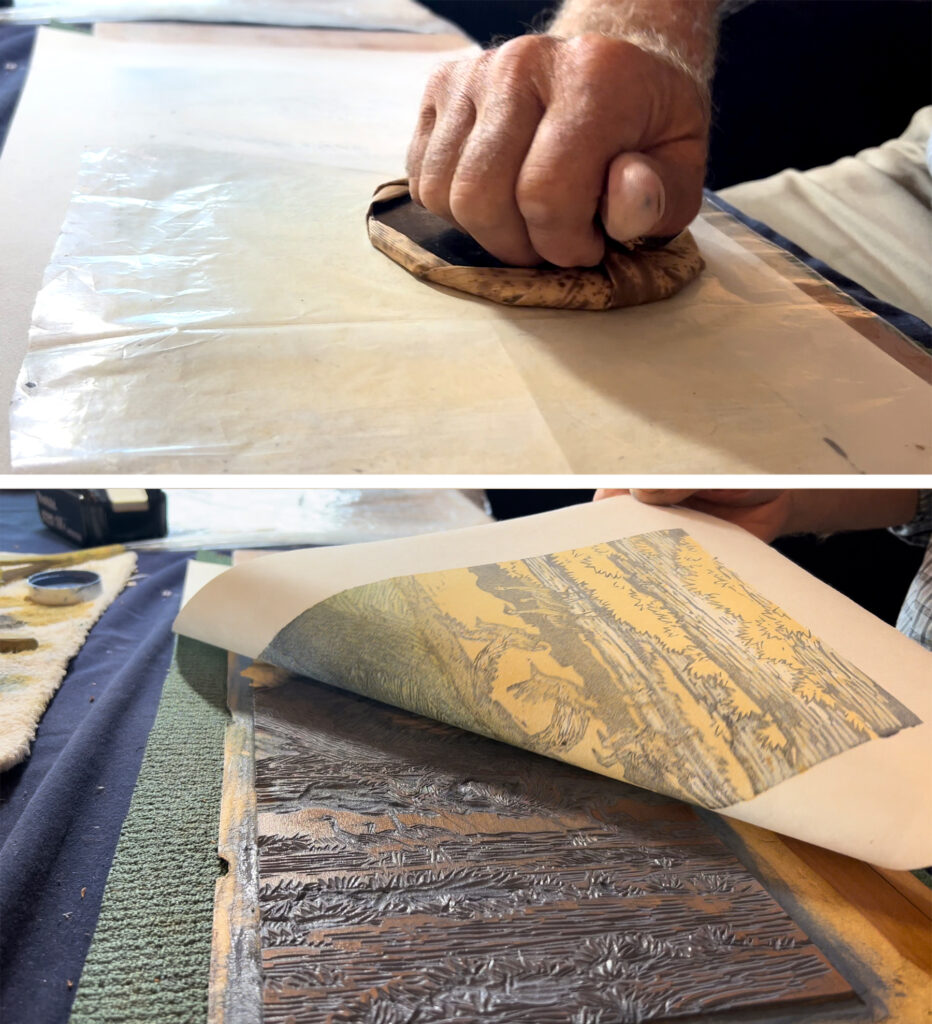
Leon Loughridge works extensively in woodblock techniques, including moku hanga traditions. Rather than carving away every detail, artists create a matrix of raised surfaces that receive ink and transfer an image onto paper.
Woodblock printing rewards patience and planning. The grain of the wood itself can influence texture and movement, becoming an active collaborator in the final work. Loughridge’s process often reveals an attentiveness to landscape and atmosphere, where carved marks can suggest changing light, shifting weather and the quiet rhythms of the West.
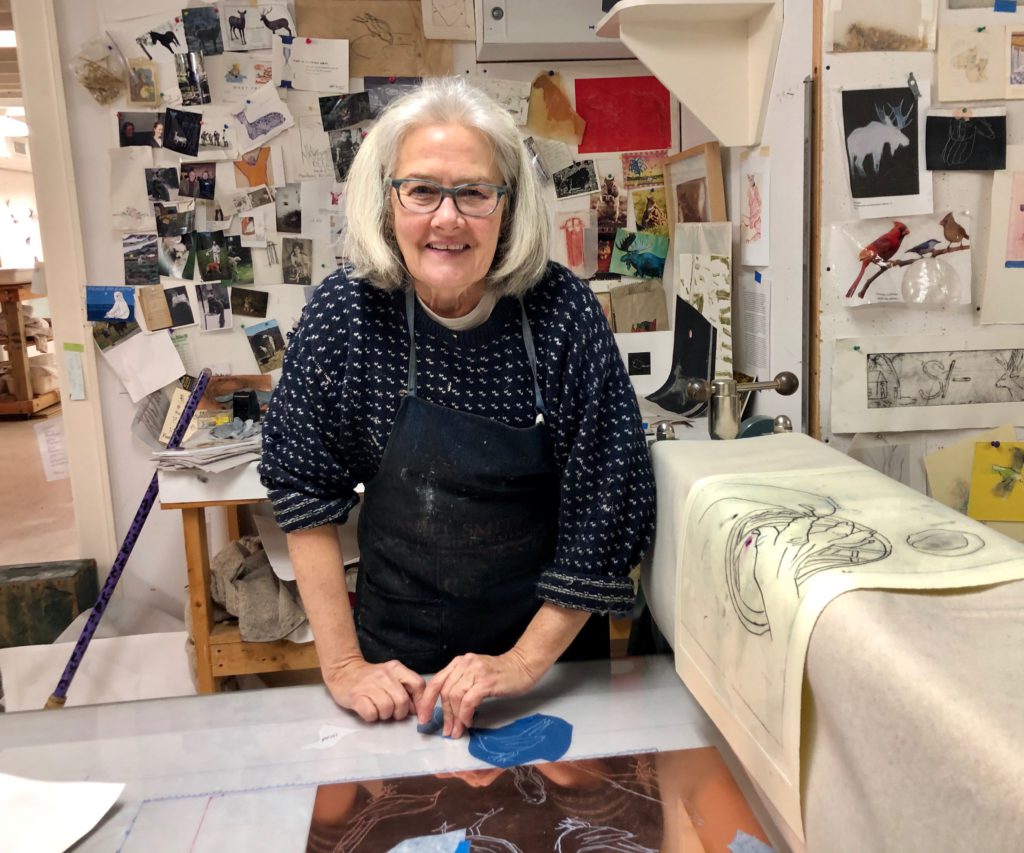
Printmakers such as Paula Schuette Kraemer employ methods including etching, drypoint and intaglio techniques. Unlike relief methods where ink sits on raised surfaces, intaglio printing places ink into recessed lines cut or etched into a metal plate.
The artist may draw into a wax-coated plate, expose it to acid, scratch directly into the metal or combine multiple methods together. Ink settles into these grooves and is transferred under substantial pressure.
Intaglio techniques are celebrated for their expressive line quality. Fine scratches can appear delicate and atmospheric, while heavier marks create dramatic contrast and texture. Kraemer often combines these techniques with collage and monotype processes, creating works with layered histories and visual complexity.
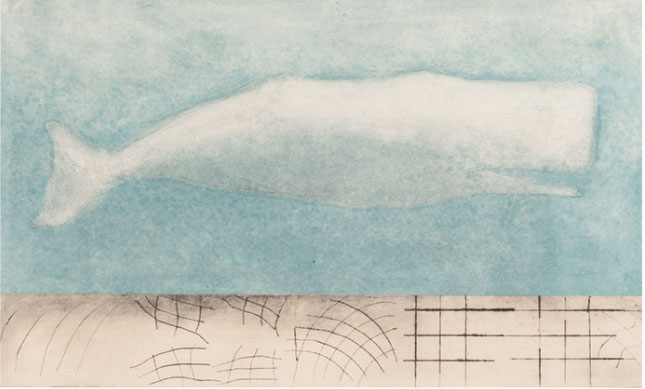
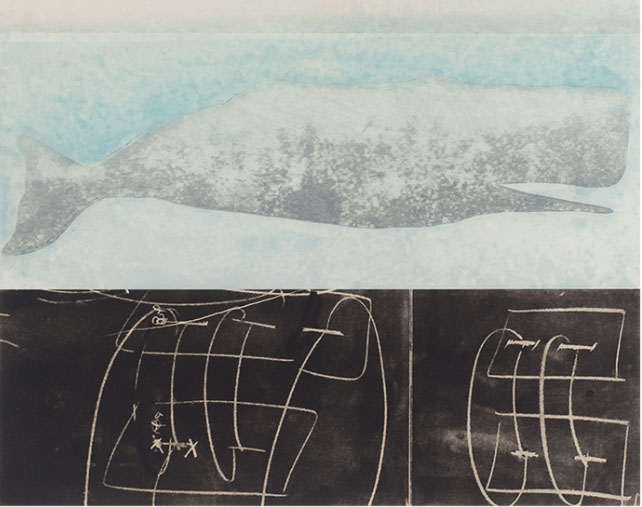
Printmaker Marcia Weese is attracted to the ephemeral quality of works on paper, using monotypes and monoprints to occupy a space between painting and traditional printmaking. Rather than creating a repeatable edition, artists paint or manipulate ink directly on a plate or surface, producing an image that often exists as a one-of-a-kind work.
Because each pull can shift, soften or reveal unforeseen marks, the process embraces spontaneity. The pressure of the press becomes a collaborator, allowing chance to play a role in the finished image. Many artists integrate monotype processes into larger printmaking practices, combining controlled techniques with improvisation and layered experimentation.
Printmaking asks viewers to slow down. Behind every image lies evidence of carving, layering, pressure and repetition — traces of decisions made long before the final piece emerged from the press.
The Pull of the Plate highlights the remarkable variety within the medium. Though the methods differ, each process shares a common thread: transformation. Through carving, etching and transfer, artists translate observation and imagination into works that preserve both technical mastery and the tactile beauty of making.

