(970) 927-9668

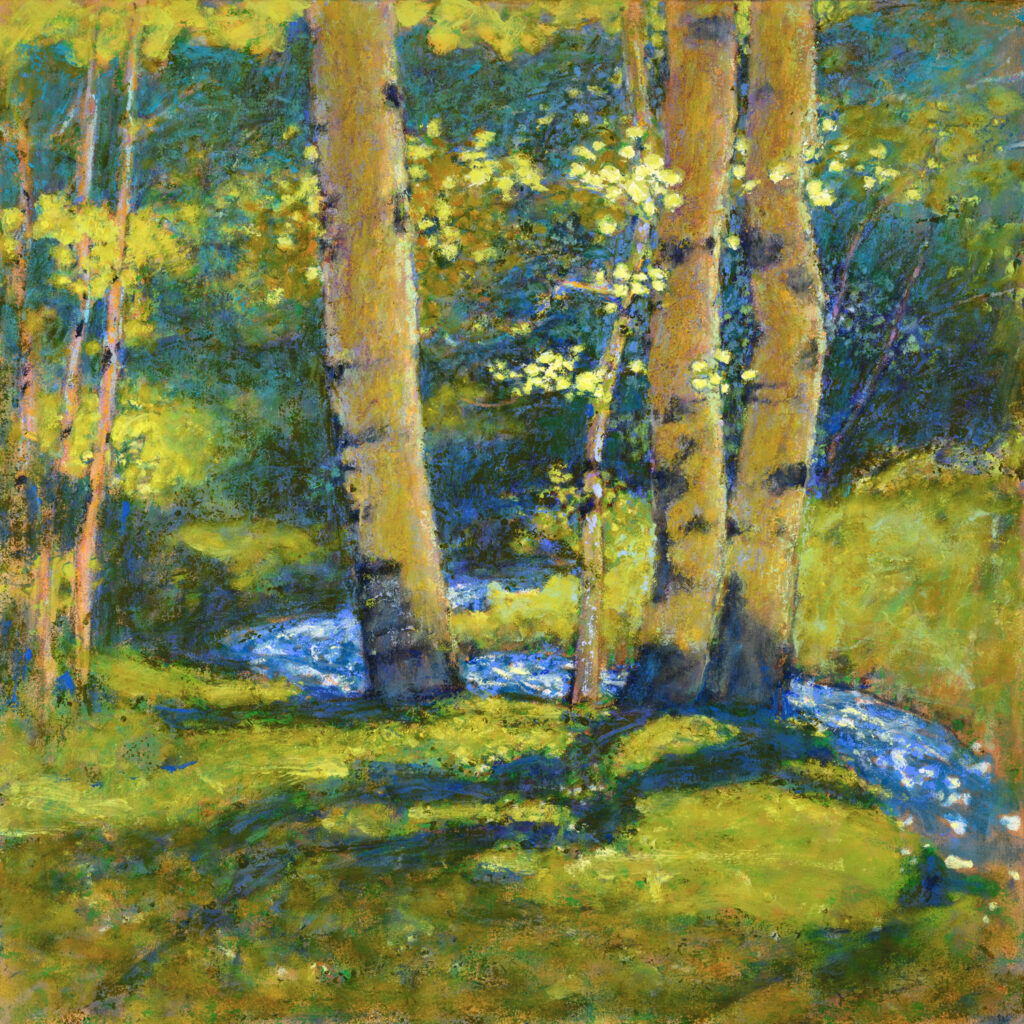
For Rick Stevens, a landscape is an experience shaped by movement, light, color and the way a moment settles into visual memory. Stevens is particularly drawn to the movement of water and the shifting patterns created when sunlight passes through leaves.
In a recent interview with Stevens, the artist shares the Japanese word for a one such moment that deeply resonates with him: komorebi, the phenomenon of sunlight filtering through leaves. These moments of observation have become an important part of the way he approaches his work.
That idea is central to Stevens’ work in Impressions, the current exhibition at Ann Korologos Gallery.
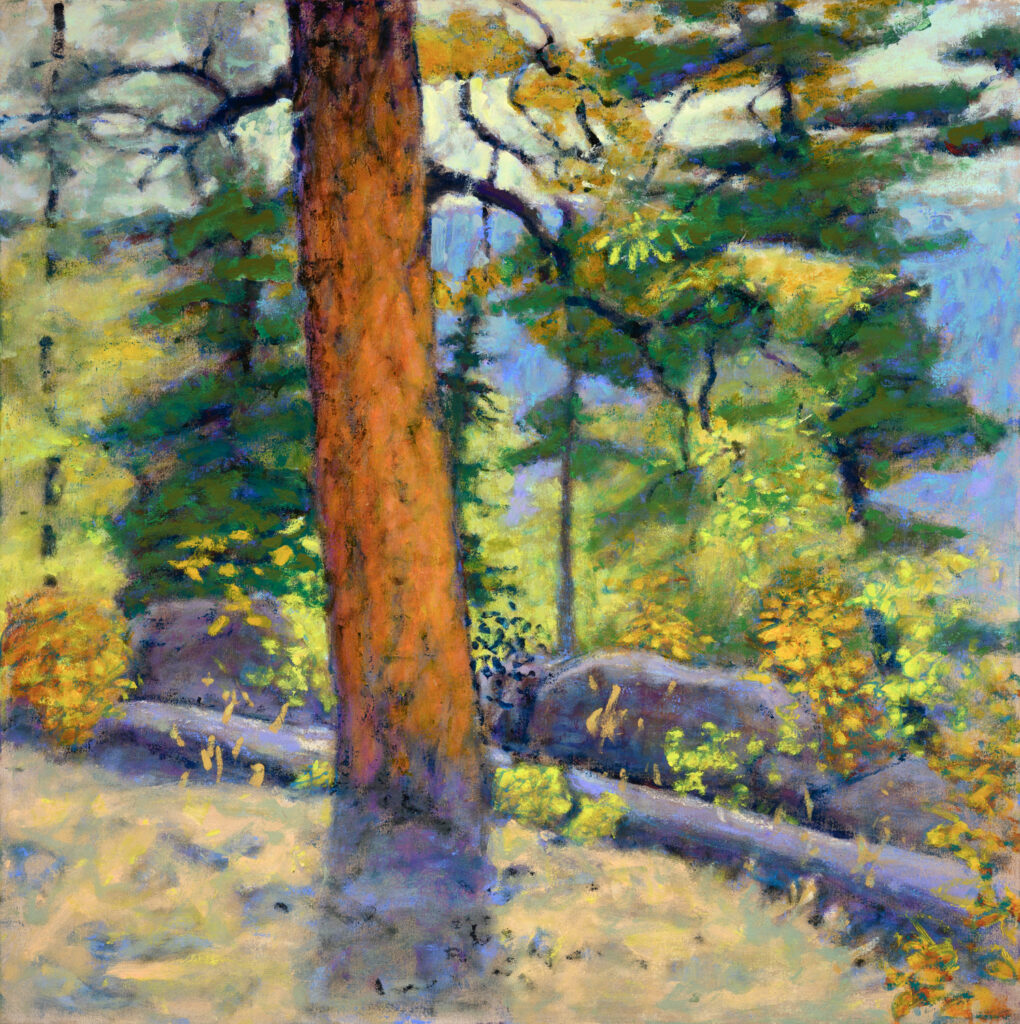
“I’m interested in capturing an impression of a scene, something more experiential than factual,” he says.
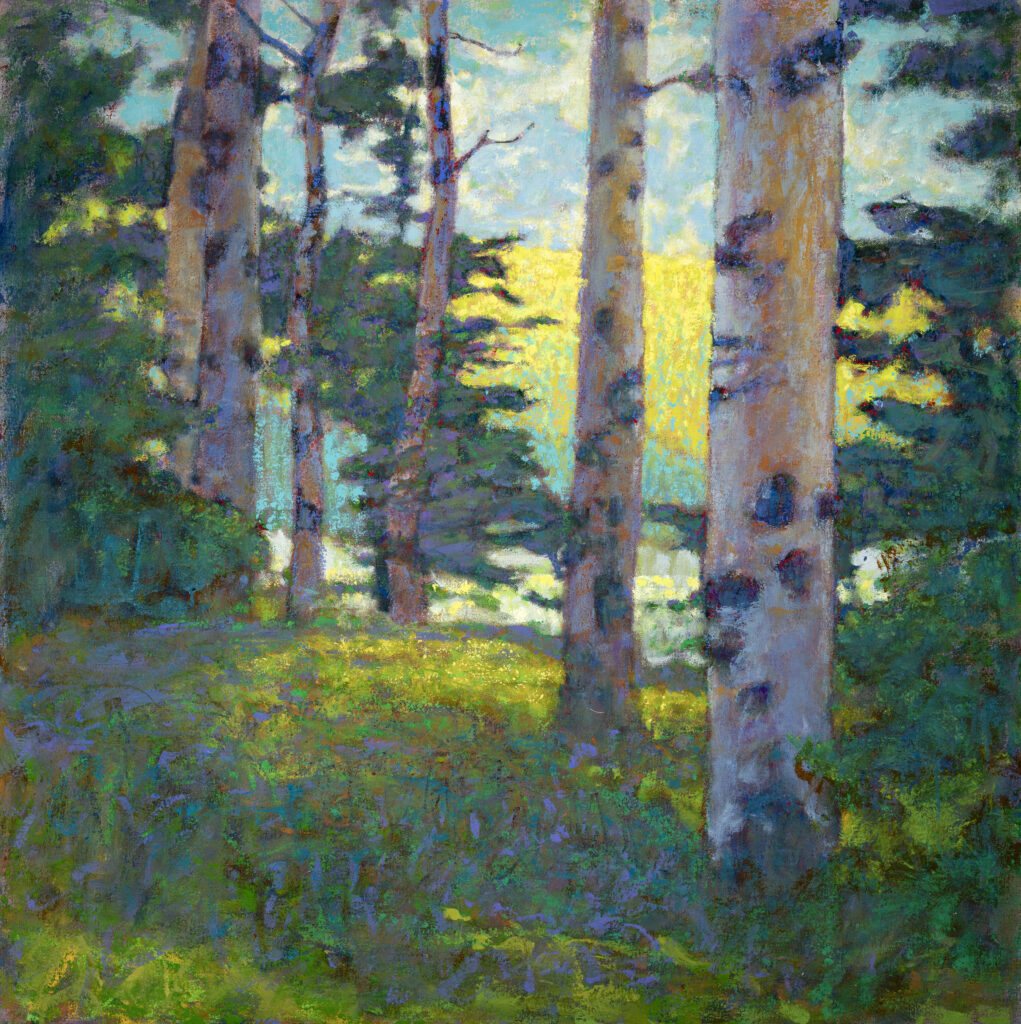
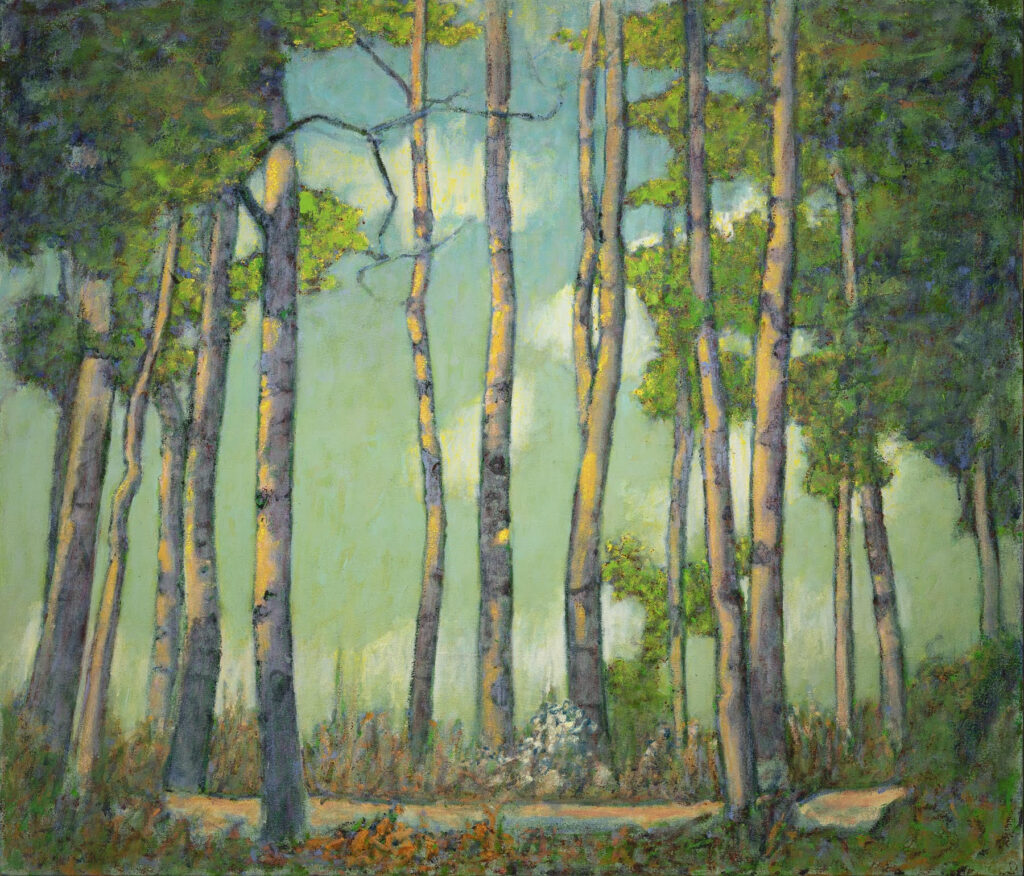
Stevens’ landscapes have a strong sense of rhythm and movement, much like the jazz music the artist enjoys listening to while painting. A color, pattern, mark or area of light may echo something elsewhere in the painting. These connections create a visual rhythm that guides the viewer through the landscape, often without conscious awareness. Repeated trees create patterns, water carries the eye through a composition, and areas of light establish connections from one part of a painting to another.
Enjoy a statement from the artist about the new works in the exhibition.
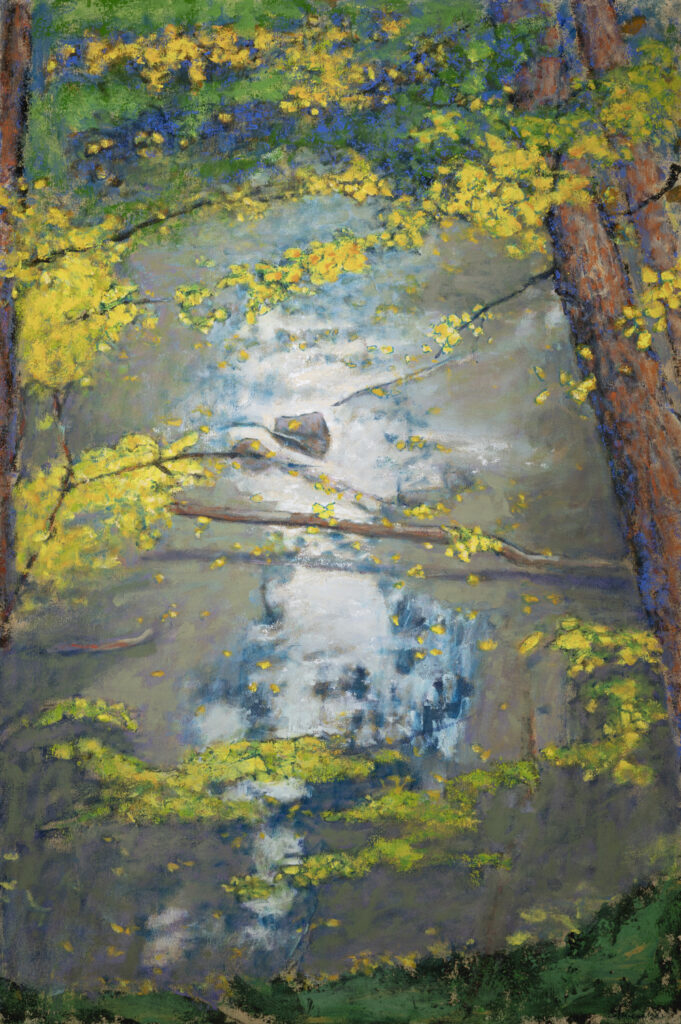
The movement in my landscapes isn’t just about placement within a composition. It’s also about creating relationships. A color, a pattern, a mark, or an area of light may echo something elsewhere in the painting. These connections create a kind of visual rhythm. The eye moves through the painting by recognizing relationships, often without our being consciously aware of it.
I’m interested in capturing an impression of a scene, something more experiential than factual. When we look at a landscape, we don’t necessarily take in a series of separate parts; we experience it as a coherent whole. I’m interested in that gestalt: the way all of those relationships come together as a single experience.
That experience can come from a brief glance that becomes etched in visual memory, or from a long, focused gaze that gradually induces a kind of trance. I like to meditate on the movement of water in a river. Watching sunlight filtering through leaves can have a similar effect, the shifting colors and dappled patterns can charm me into euphoric states.
There’s a Japanese word for the phenomenon of sunlight filtering through leaves: komorebi. I’ve been drawn to this experience for a long time, long before I encountered the word. The act of simply watching the light, color, and movement of the leaves can become meditative. I think this kind of sustained attention and rumination has deeply affected the way I paint.
My work is often inspired by a particular place, a scene that captures my imagination. But I’m not only trying to depict what I see. I’m also attempting to capture something of the experience of being there and to get at something that is felt but not necessarily visible. In that sense, I’m trying to capture the unseen.