(970) 927-9668
For Maura Allen, the American West is not a relic of the past — it is a living story. Working across photography, painting, printmaking, and glass, Allen layers silhouette, color, and history to create bold contemporary works that feel both timeless and immediate. In this conversation with Ann Korologos Gallery, she shares how myth, memory, and modern life intersect in her evolving vision of the West.
I have been a photographer for 50+ years — back to the darkroom days. From the start, my love was (and still is!) black and white photography. Two of my cameras are black and white cameras, which is rare. I program my color camera bodies to show the image on the back of the camera in black and white. I do this because I am interested in light, shadow and form, and black and white is the most effective way for me to do that. When I am photographing on ranches, rodeos or on “Main Street,” I am looking for stories told through silhouette. I want the least amount of information possible to tell the biggest story.
Photography and the American West grew up together — a connection I celebrate. I work on wood panel which allows me to layer, remove, and add more layers to give a sense of history or patina in the background. I marry that with bold, modern-day imagery that I have made while on the road throughout the West. Each painting is original and tells a different story of the West. Like Andy Warhol and Robert Rauschenberg, I use screens instead of brushes to achieve a bold, smooth/flat surface that also has “history” through other layered-in elements.
I work across traditional art silos: painting, printmaking, photography, and most recently glass, in a style I’ve developed for more than 20 years. I don’t think of the disciplines as separate; each art form informs the other. I learn about composition and form from photography, and that informs how I paint. The way I build layers in a painting influences the way I “build a scene” when I am photographing. Working with glass has introduced new elements: heat (1450 degrees!), time and reactions.
I studied Latin / Classical Studies in college which set me on my way into the world of myth, legends and the power of story. It’s a universal truth that has endured: We are all wired for story. I love what Robert Redford shared about his favorite phrase, “Once upon a time…,” and how that story “opener” is an invitation to a new world, a window to travel through, to wander and wonder. I think that’s true of the West. The stories I am drawn to are past and present (Old West and new). The power of story and myth is central to my work and how I see the West. It’s a blend of real and romanticized. In my work, I try to “bend time” and invoke a “once upon a time” ethos while celebrating the West today.
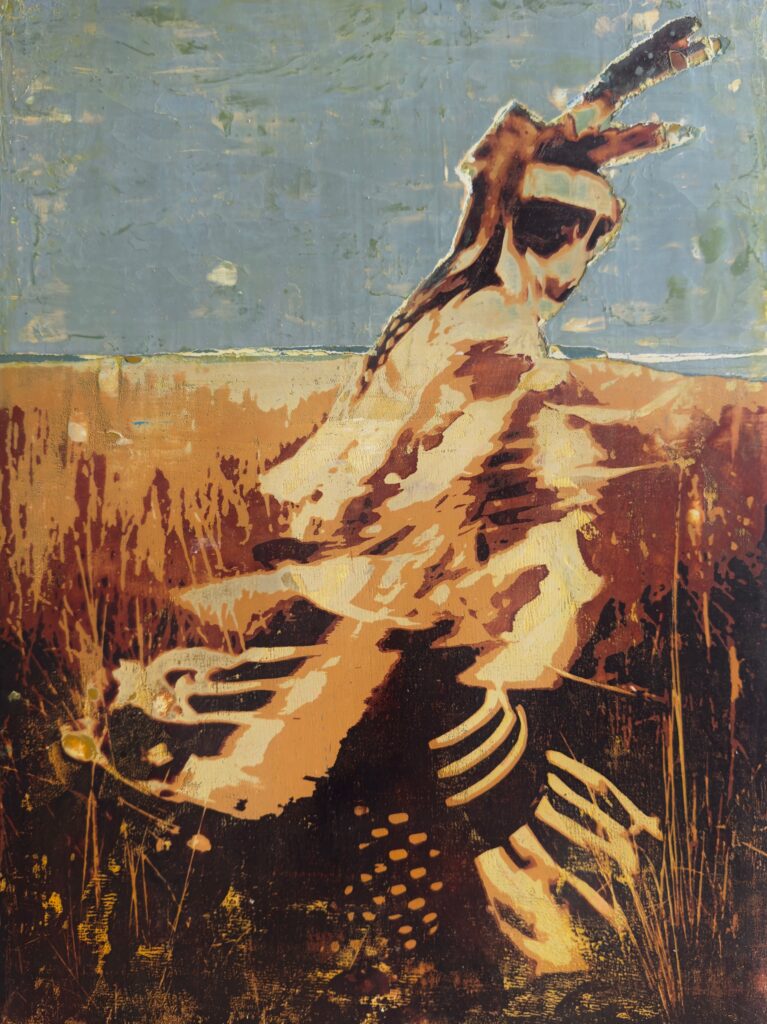
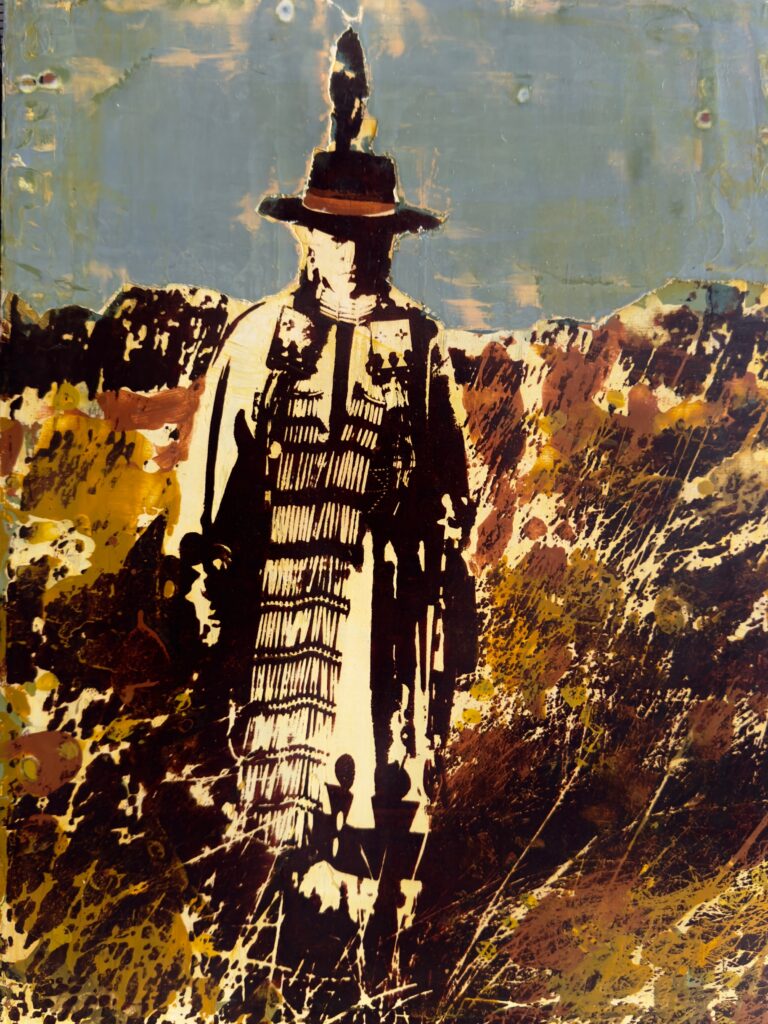
Early influences were Eadweard Muybridge and his iconic stop action images from the late 1800s of a horse running. Those images were taken and displayed around the corner from where I grew up and went to college (Stanford University). I saw them on a 4th grade field trip, and they’ve been a part of me ever since. Their graphic form — the silhouette — is a driving element in my work. Add in 1960/70s-era graphic patterns from the Finnish textile company Marimekko, plus my deep love of black and white photography, and you have a sense of how I see (and paint!) the world.
As I have spent more time on family ranches over the past two decades, I have witnessed the shift that ranching is not an absolute path, that the next generation may choose not to ranch. As a result, ranch land is being divided (and often developed) and “ranch life” is shifting. Traditions are disappearing.
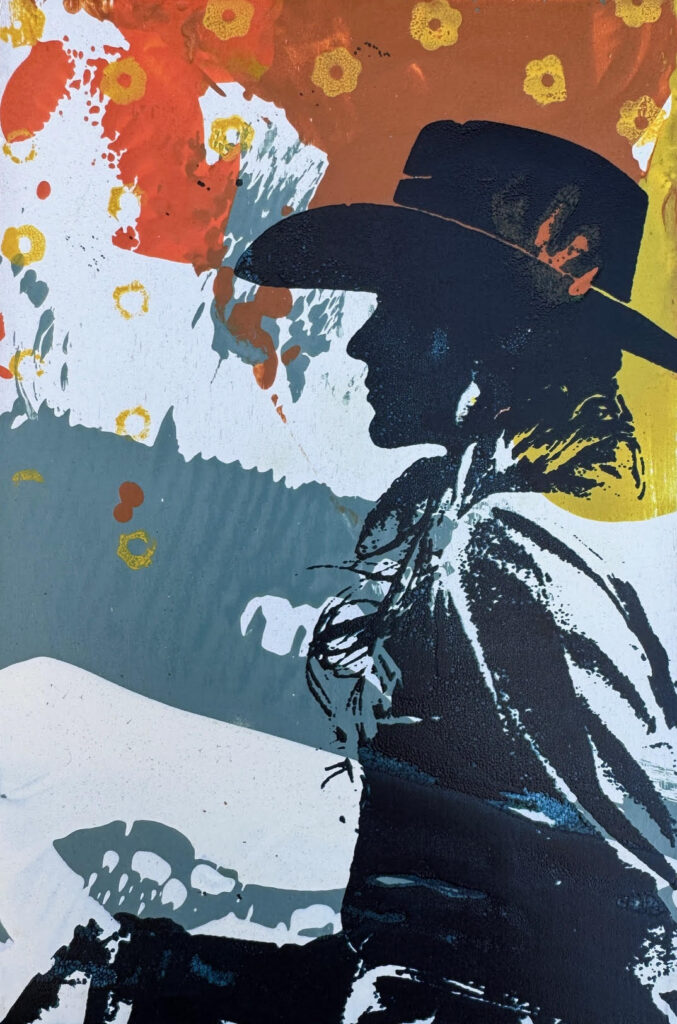
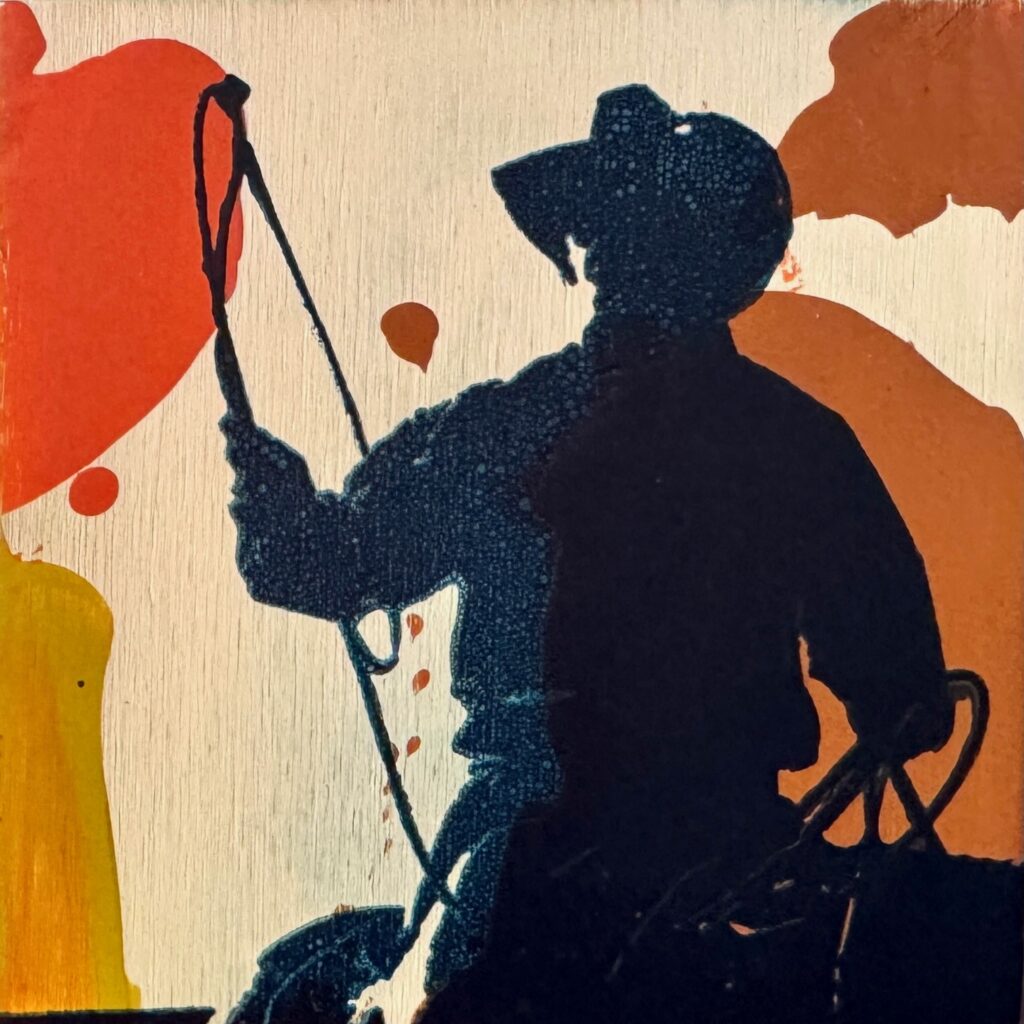
The West is wide open skies and often defined by its big expanses — but can its memorable beauty also be small? I think so. The power of the silhouetted western “characters” mixed with the colors of the place are proof of that.
Sometimes I know immediately after making an image that I will paint that image, those individuals; other times, I come back to my studio in Abiquiu, NM and I discover the strength of the story “hidden” inside the image. When I am photographing at a ranch, for example, I like to disappear. The first few hours, we’ll spend taking images of the family at work (and play), then magically I am able to disappear. The family forgets I am there, and I am able to chronicle their lives, the in-between moments that make up the day and night. I love seeing how traditions on a ranch are passed from generation to generation — probably because I am from a family of eight and have long been captivated by family dynamics and how work (chores!) gets done, how siblings bond and parents guide.

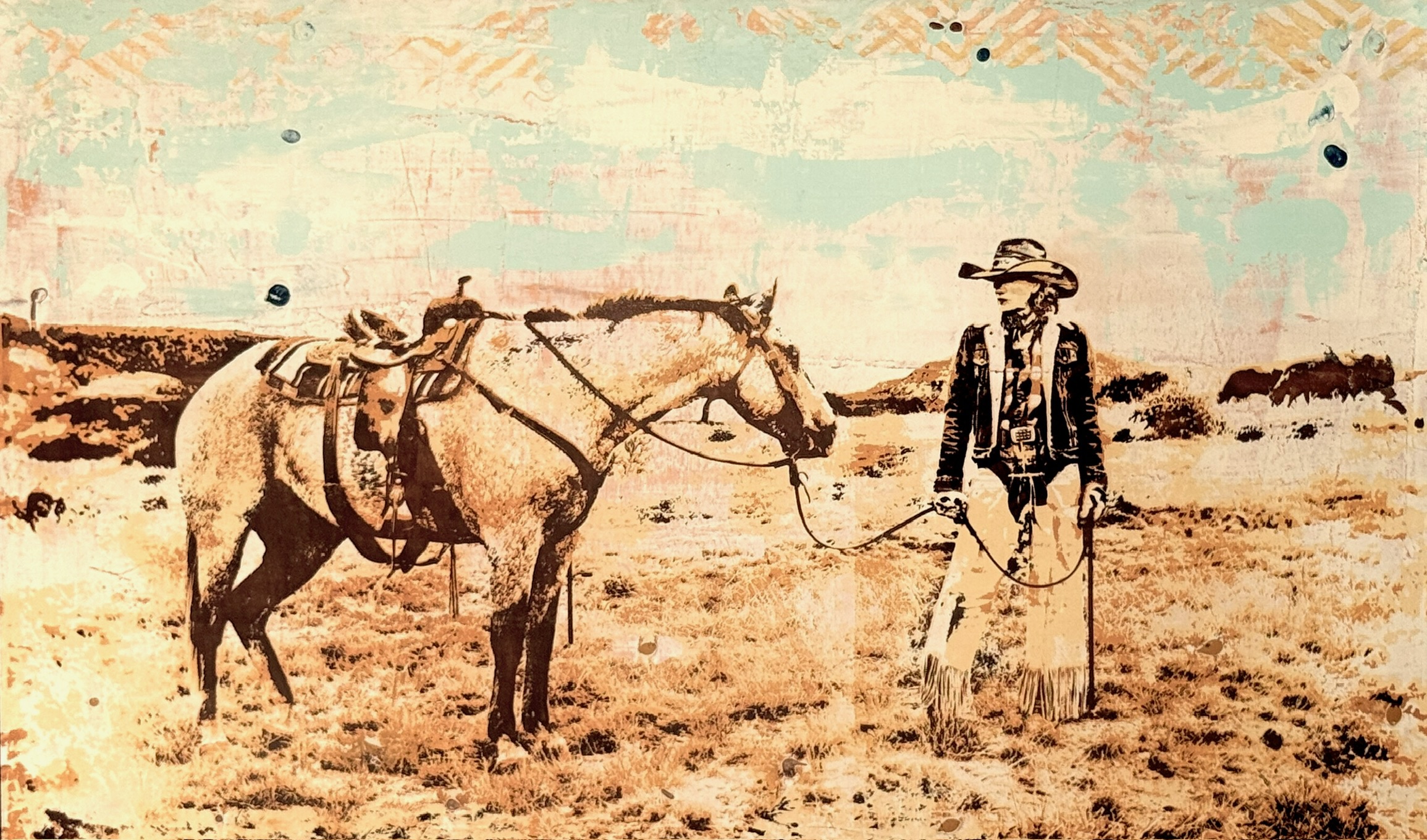
One snowy day in May, high in the mountains of Craig, Colorado, I met this cowboy on a drive to move 300+ horses from an upper pasture to Sombrero Ranch, then to different locales in Steamboat Springs for the summer months. The week brought early summer days in the 70s and dust blowing on western wind, followed by snow … trademark Colorado! Classic looks in a quintessential setting; I knew in an instant I would paint the moment that became Well, Hello There.
Life in the West is alive today. It’s hard work — and satisfying work. There’s a deep camaraderie that often gets overshadowed by the myth and mystique of the lone cowboy. The through line in my work is a “past is present” ethos — a sense that history matters and informs our view of the West today and the future.

