(970) 927-9668
Few Colorado artists capture the shifting moods of the natural world with as much insight and immediacy as Dan Young. Young’s impressionist landscapes reflect decades of painting in the ever-changing light of the Rocky Mountain West. Raised in the Roaring Fork Valley exploring the rivers and high country of western Colorado, he trained in illustration before returning home in 1989 to pursue painting full-time — a decision that has shaped a rich career marked by a deep connection to place and a keen sensitivity to color, atmosphere and fleeting natural moments.
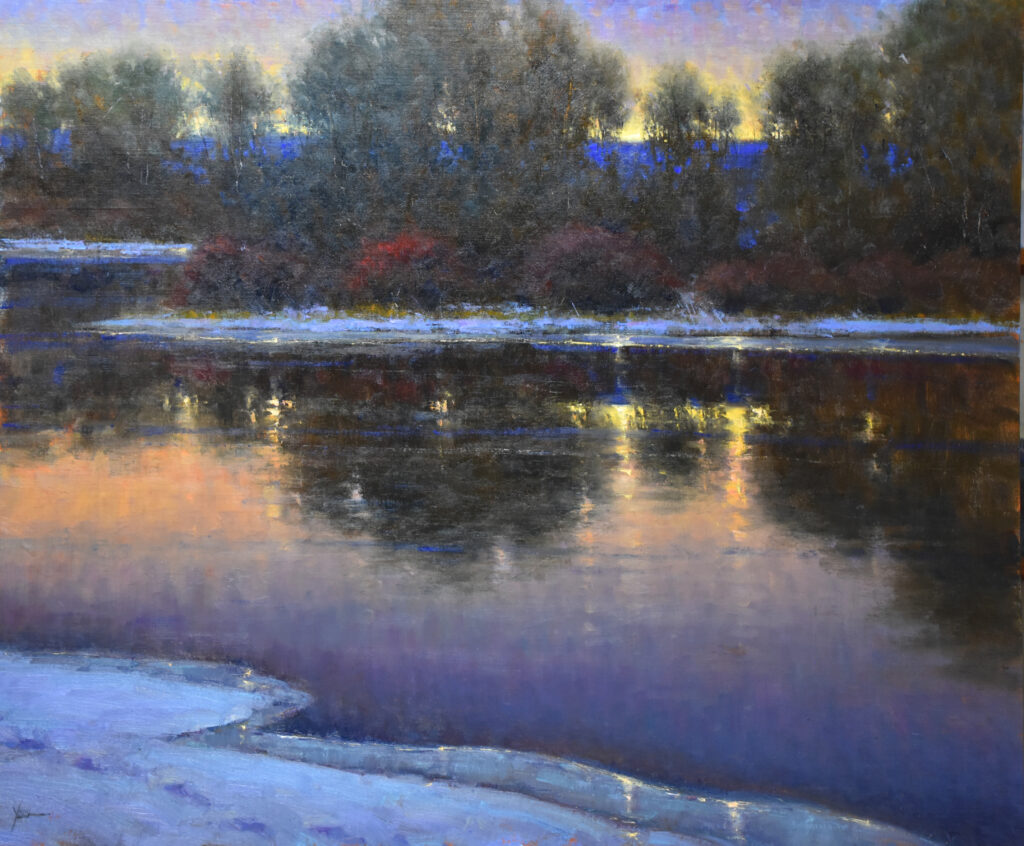
In the context of Gathering Light, Dan’s work resonates with both a reverence for the ephemeral qualities of light and a commitment to simplifying what he sees into compositions that feel immediate yet timeless. Whether painting plein air studies or studio works inspired by winter’s unique palette, his art invites viewers to both observe and feel the landscapes that have defined his life and practice.
In this interview, Dan reflects on how seasonal change, observation and the challenges of winter inform his approach — shedding light not only on his process, but on why the light itself remains such a powerful subject in his work.
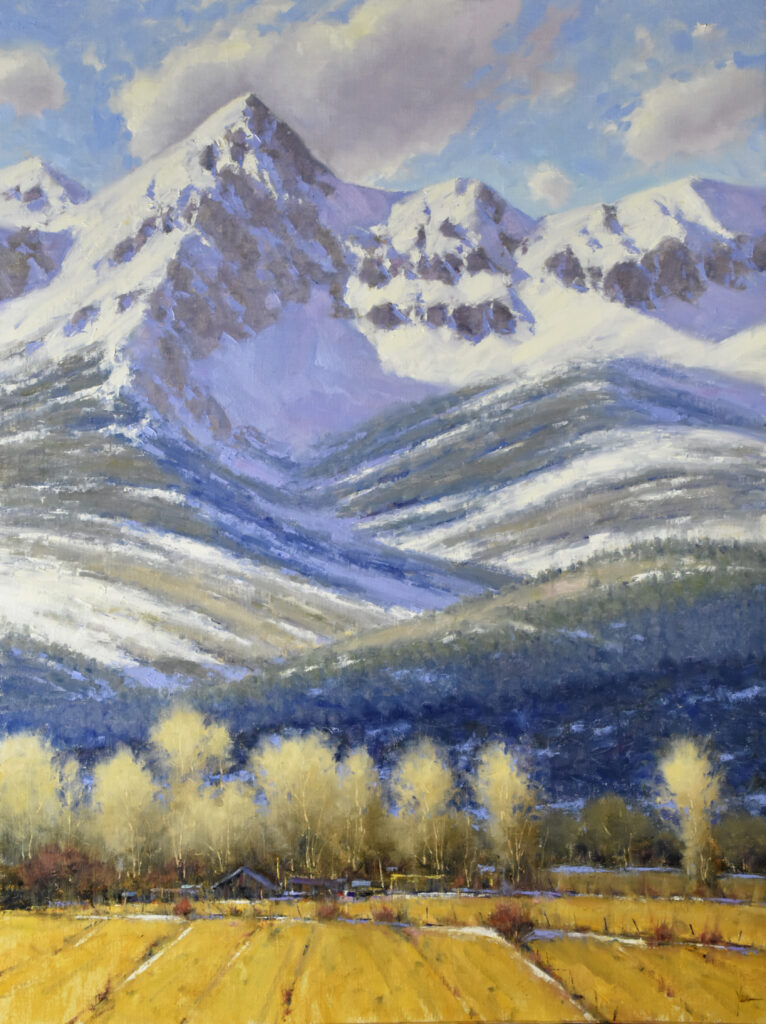
I always say, “The season is now.” However, I am always excited when the seasons change. I feel like I get a clean slate to work with. All my familiar scenes have something new to offer. Winter is no exception. It simplifies a lot of the noise and busyness in nature. As I try to move my work into a more abstract direction, simplifying is a big part of that process. A fresh coat of snow can quickly simplify the elements in the landscape.
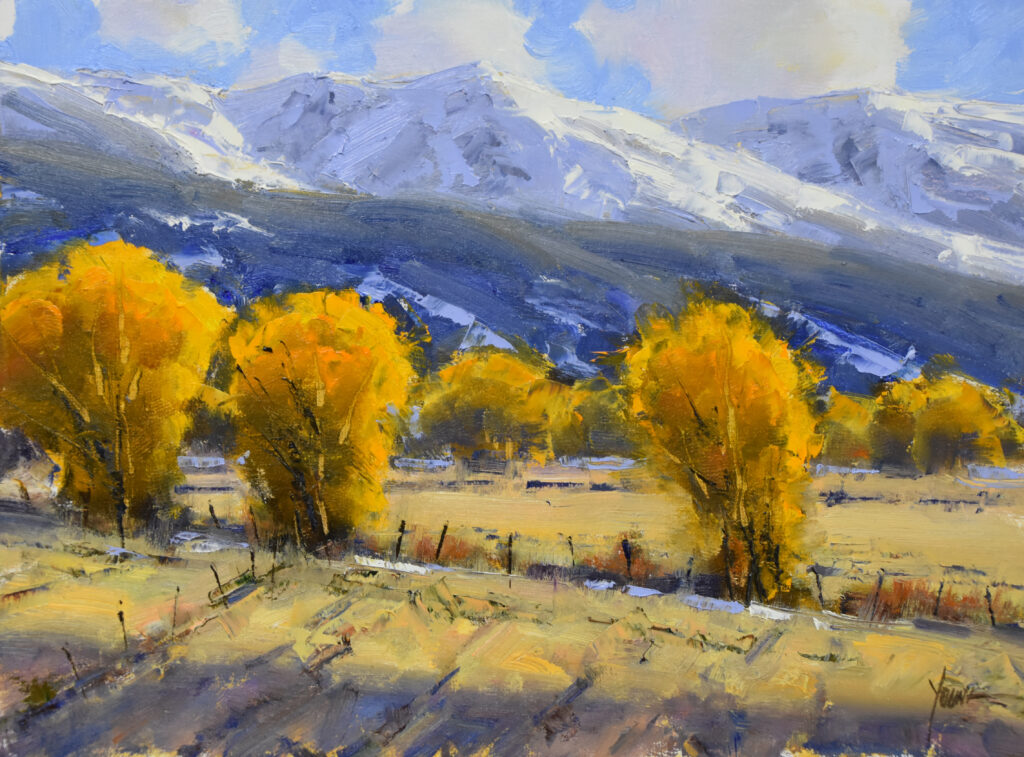
I can be just as excited about a gray winter day as a sunny one. They both gather light and filter it in different ways. Snow has such a reflective quality; it is highly influenced by the colors in the sky. Observation is an important tool for a landscape painter, and during the winter, your senses have to be elevated to see and understand what the light is doing to your subject.
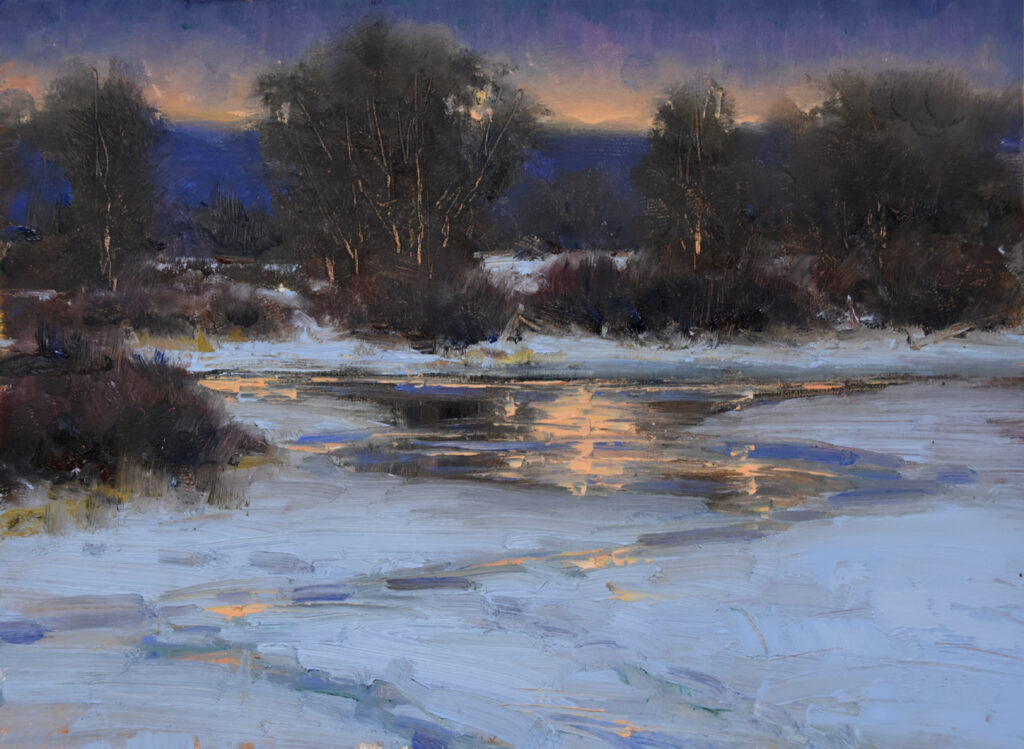
I used to paint outside in the winter a lot. Unfortunately, dealing with the cold has caused some unrepairable damage to my fingers. They no longer do what I ask of them in the cold temperatures. I do still spend a lot of time out wandering and observing nature.
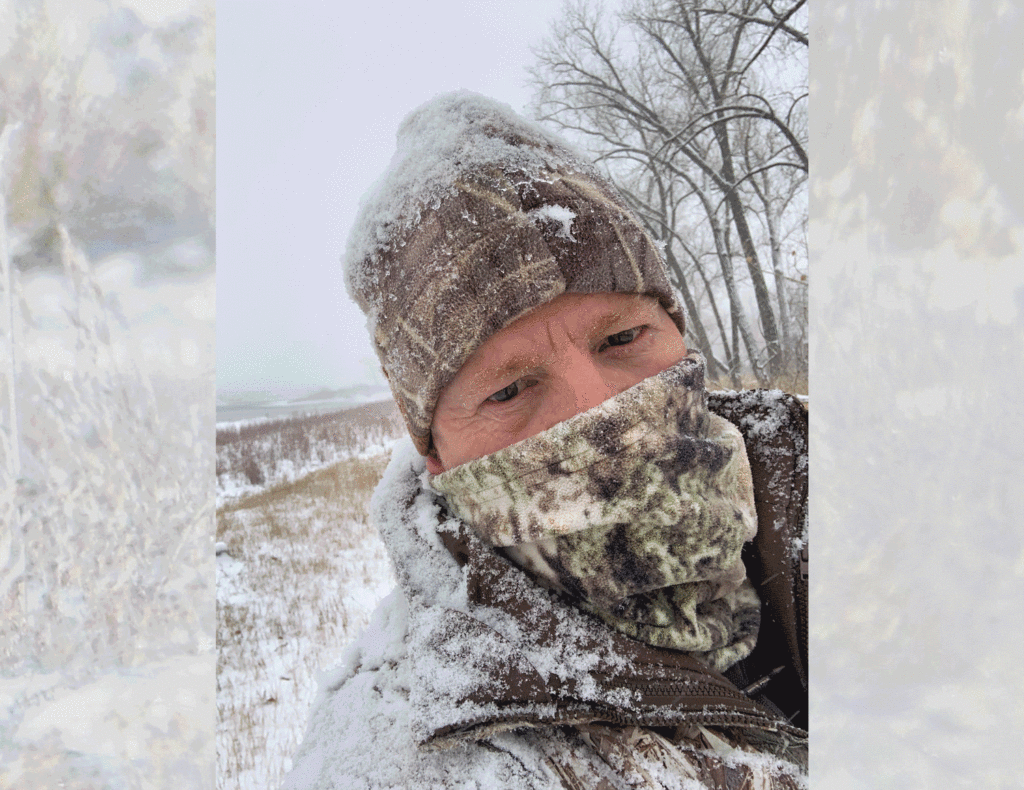
Rechargeable handwarmers are now an important new tool for me. I can still sketch, take notes, and a photo or two. It allows me to slow down and really watch what’s happening with the light and color. I used to love the experiences of painting in the winter. I was forced to paint quickly, which made me go after the important elements in the painting. I didn’t have the luxury of time to overwork things. Some of my very favorite outdoor sketches were done in the winter. I am fortunate to have held on to some of them as reference but also disappointed I let so many go, as the ones I have are so valuable as reference. When I’m painting a winter piece in the studio, quite often I will pull out some of the successful sketches I have as reminders and inspiration.
I do hope to always explore the boundaries in my work. For me, an emotional connection in a painting is so much more important than details. I’m always trying to take complicated things and say them in a simple way. When it happens, I get much closer to poetry in a painting. You can tell the truth without the details. I want people to feel the cold in a winter piece and yet take comfort enough to want to hang it on their wall.
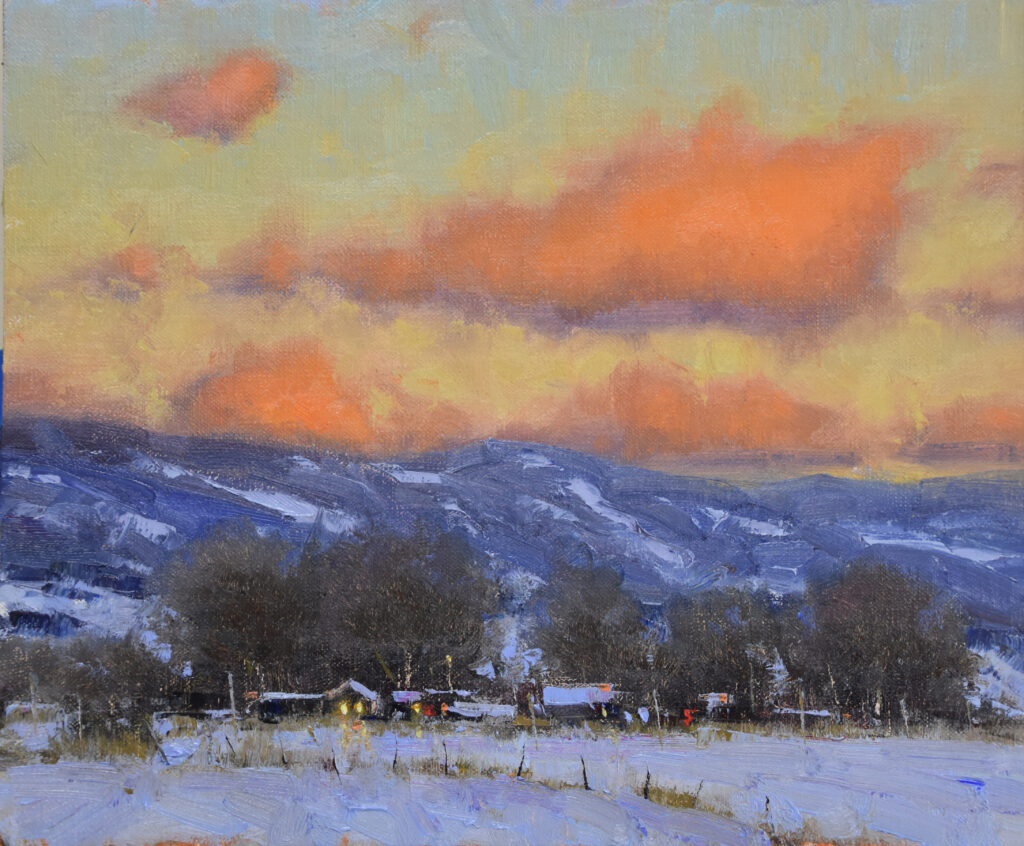
You mentioned the darkness of winter. I find that interesting. I personally don’t see darkness, just opportunities. I have done a lot of winter night paintings, and they do seem much harder to find homes for. That makes me think a lot of people would probably agree with you. I do try to add warmth any way I can in winter paintings. I love a play of temperatures within a piece.
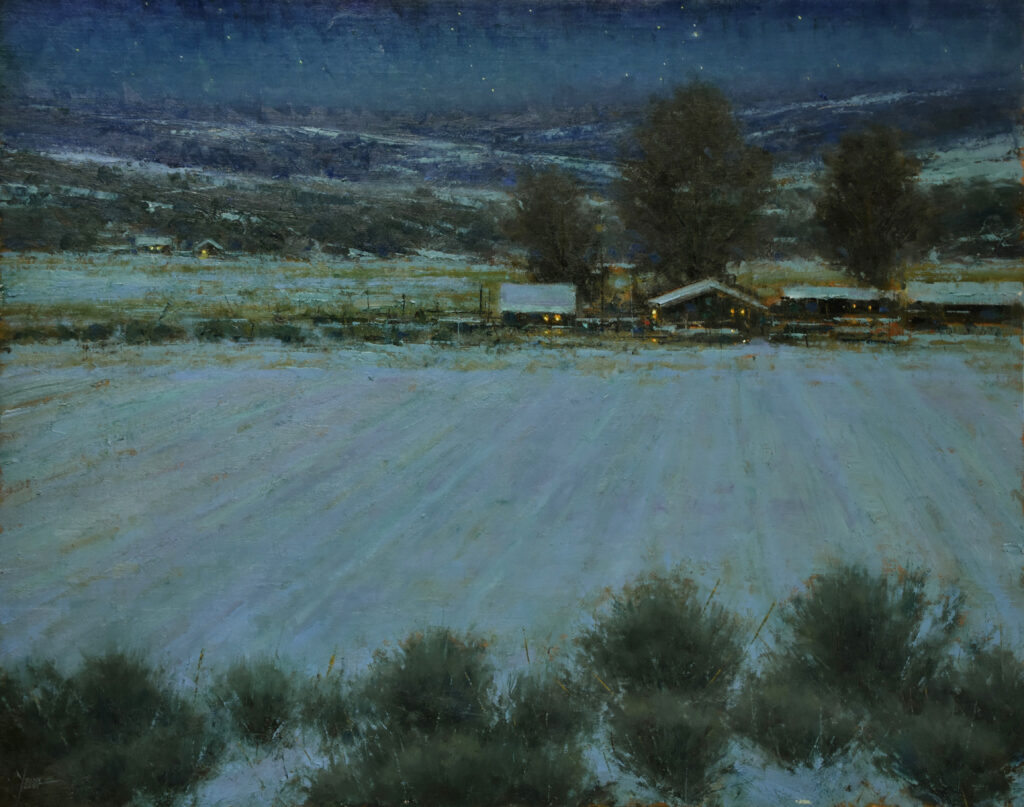
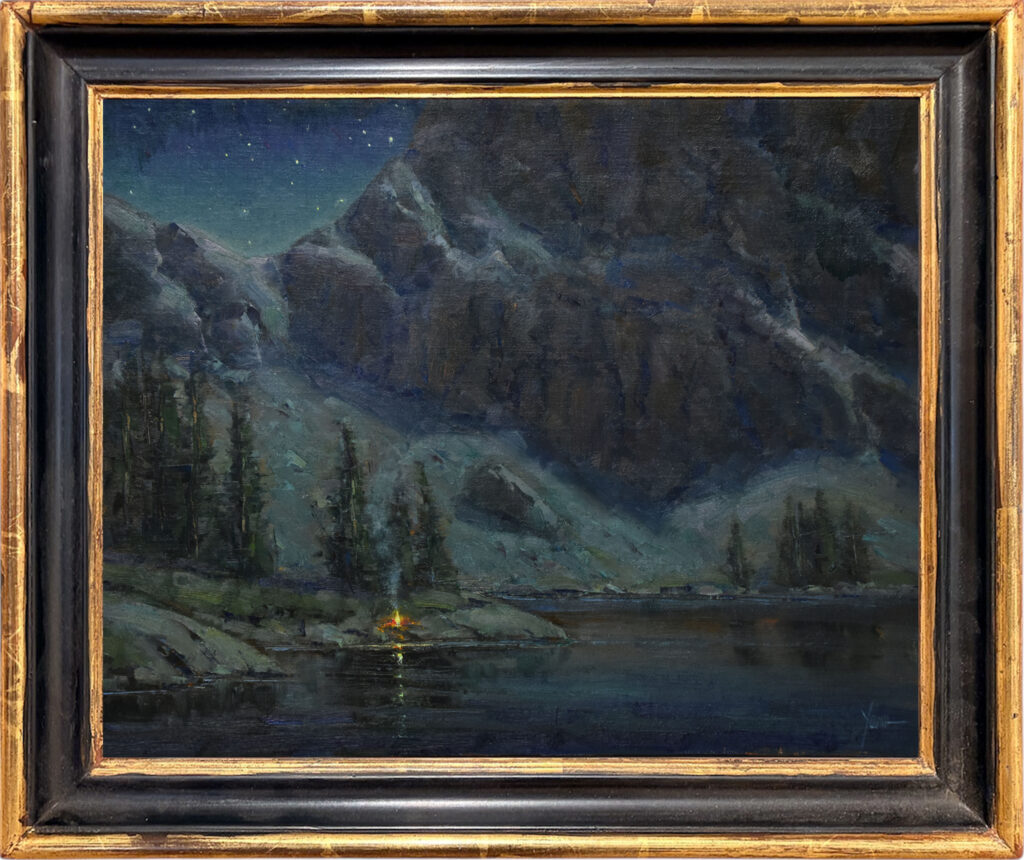
Learn more about Colorado artist Dan Young, view available work, and experience his most recent arrivals in Gathering Light.

