(970) 927-9668
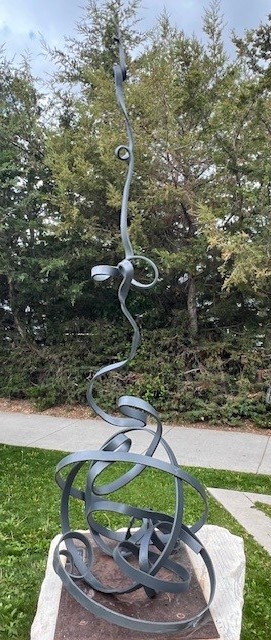
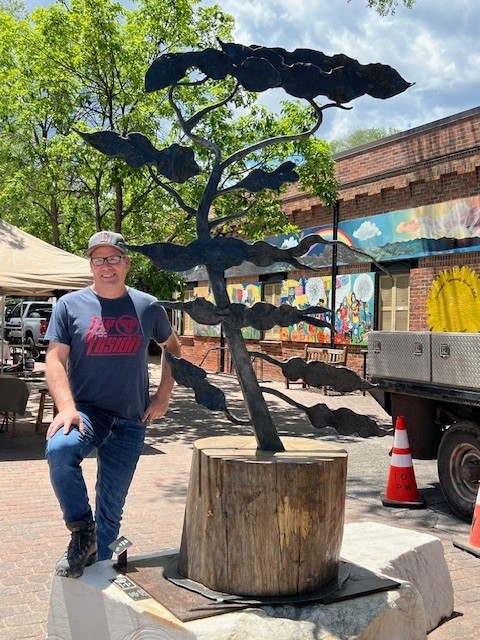
Paul Reimer is a blacksmith from Cranbook, British Columbia – “the Rocky part of the Rockies,” as he shared by the river in a conversation with Ann Korologos Gallery. Paul Reimer, a blacksmith from Cranbook, British Columbia, found the gallery while he was in the neighborhood. Reimer had driven to Colorado to change public arts commissions, an annual tradition of his since 2021 when he was selected for the Town of Carbondale’s “Arts Around Town” program, and then the Basalt Public Arts Commission since 2024, both of which he has participated annually. This June, Reimer returned, but this time to install a new sculpture in historic downtown Basalt, as well as to deliver new works to Ann Korologos Gallery. Learn more about the Canadian artist/blacksmith from this interview below.
“As a blacksmith I can forge the steel down into these shapes that look like they’re almost floating.
I have a public art practice as well as a gallery practice. So I create large public art sculptures and I also do medium sized public art which goes a lot into a lot of civic, outdoor sculpture festivals.
And while I was here I saw Ann Korologos Gallery and I thought this gallery is amazing! I was pretty confident that what I was doing would resonate with the clients of the gallery. There’s such a tradition of flyfishing on the Roaring Fork and Frying Pan and I thought this would really resonate with people.
It’s always exciting to catch a fish, but what makes it rewarding is the process, and it’s the same with creating art.
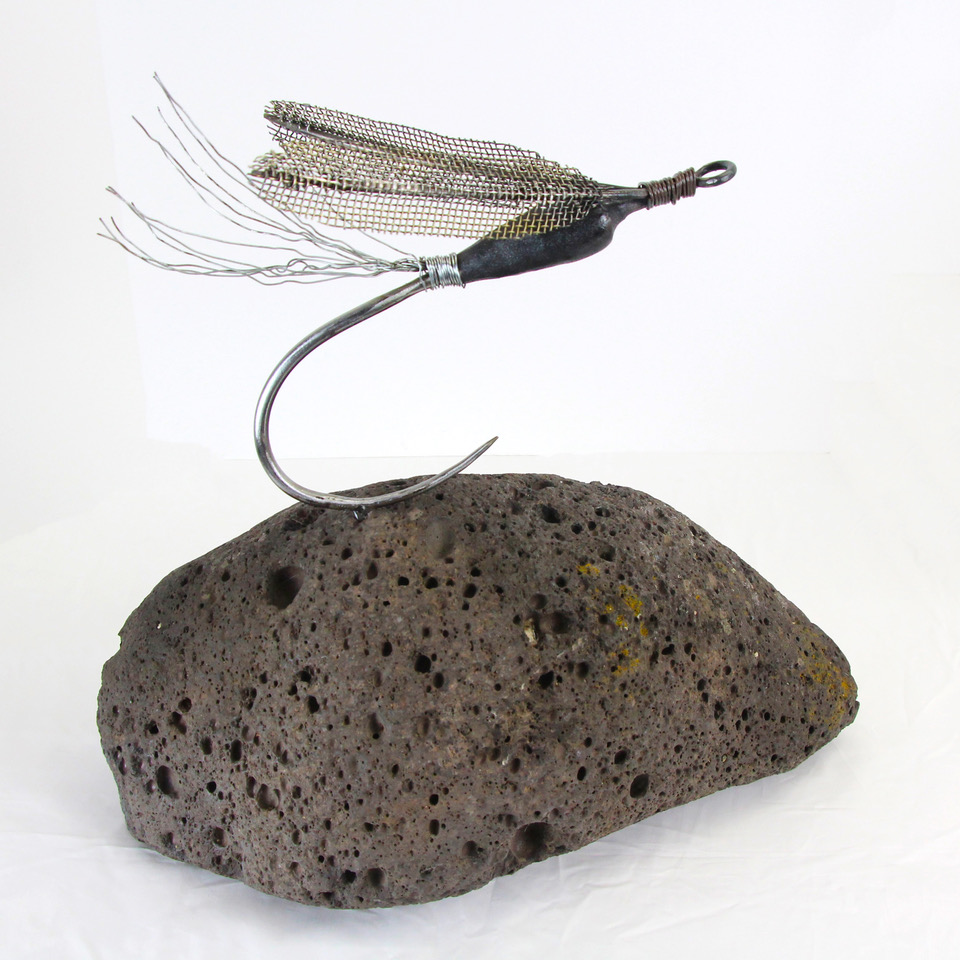
A lot of times when I’m creating art, I’m thinking, “Who’s going to get this? Where are they going to put it? What place will it have in their home? When you’re fly fishing, it’s that serenity of being in nature, and the calmness of the water, the movement of the water and how that speaks to your soul. It’s not about catching the fish, it’s about the whole experience of destressing and entering in to that place where we exhale. It’s a bit of an artistic juxtaposition because I’m trying to have something really heavy on the base connected to something light. I’ve played with this a lot in my art – when you have this tiny little flyfishing hook, it can represent a really large part of your life if you’re really into fly fishing, and so by making it big, it connects to the significance of this thing that’s in your life.
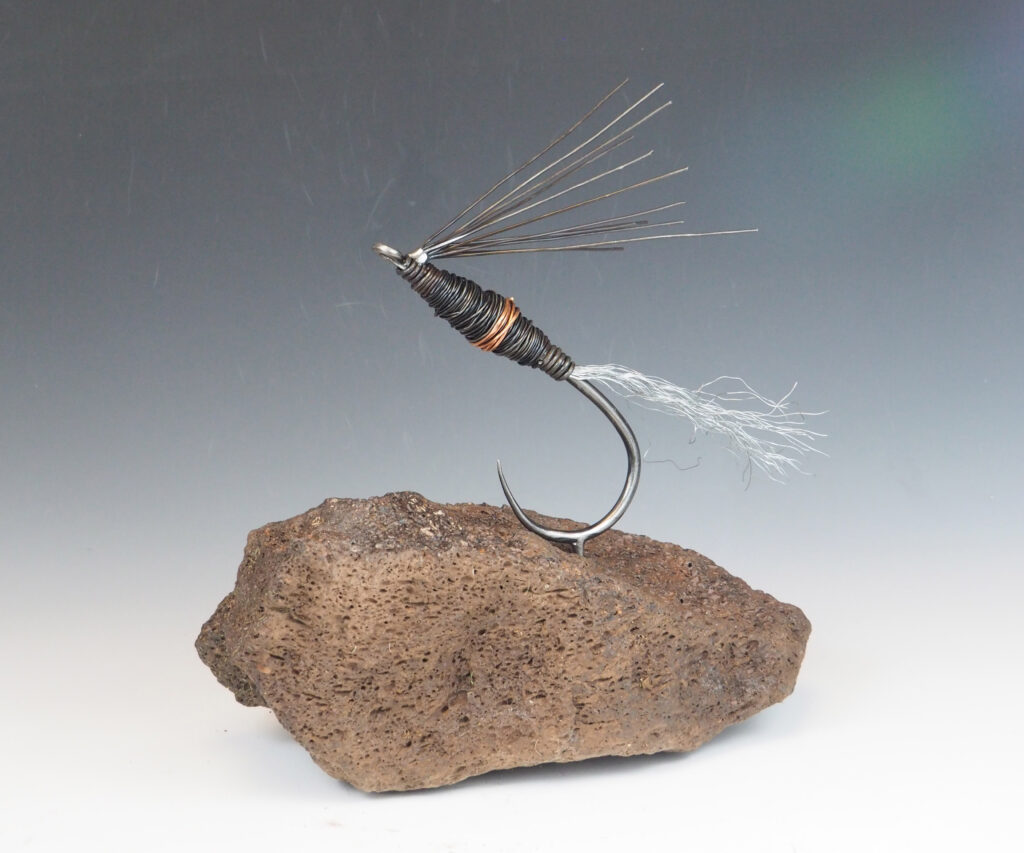
One of the things I try really hard to do when I create art is to connect to people on an emotional level, where there’s some type of a memory or a feeling, that the artwork resonates with them. When you think about your happiest outdoor place, the place where you’ve had you’re most wonderful times. Close your eyes. the pictures that come to your place, they’re not crystal-clear. They’re kind of fuzzy around the edges. I’m trying to tie into that when I make the sculpture. I’m not trying to make an actual perfect representation of an elk haired caddis. I’m trying to create the memory of an elk haired caddis.
I really like to try to connect my sculptures to the geographical area, and so I go scrounging along the banks of the Fryingpan and the Roaring Fork and I walk along the riverbanks until I find one that speaks to me. And I’m like, “Oh, that one. That one has the shape, and the look and the feeling that I’m going for.”

