(970) 927-9668
What happens when paintings stop explaining and start asking questions? In her latest body of work for What Lies Beneath, Alexandra Eldridge continues her exploration of paradox, symbolism and the unseen forces that shape image and meaning. Built through layers of Venetian plaster, text and abstraction, these works invite viewers into what Eldridge describes as the space between — where poetry and painting, object and symbol, intuition and interpretation coexist without resolution.
Alexandra Eldridge: Exuberance is more of a palimpsest with layers of information and layers of my history as a painter: venetian plaster, old texts pressed into the plaster (in this case an old book of magic that I bought at a book stall beside the Seine in Paris), then the scratching off of the text here and there, and finally I paint the somewhat realistic peacock feathers in a pot. The magic in the book led to the exuberance of the feathers. Wm Blake says, “The pride of the peacock is the glory of God.”

Alexandra Eldridge: We have been working madly on Alchemy of the Divine Feminine, a book of women’s poetry and my paintings.
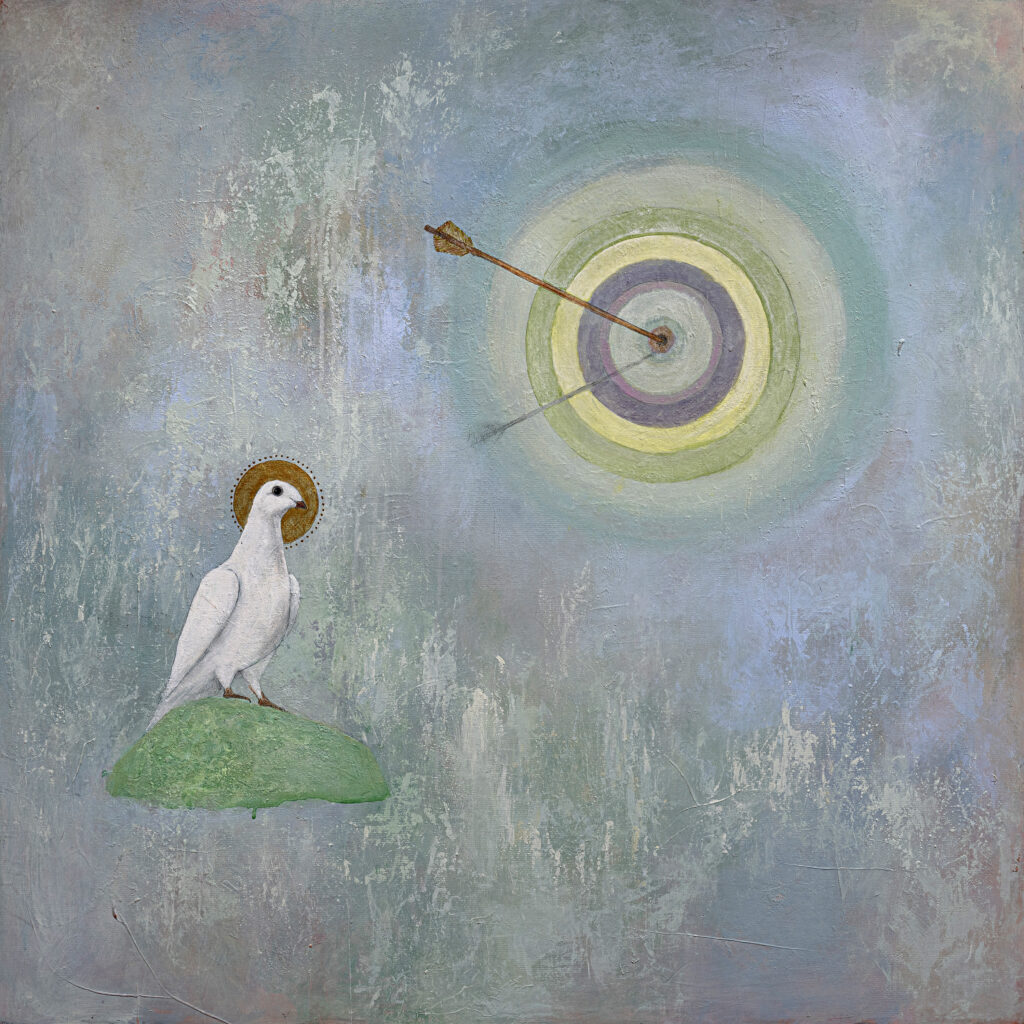
Alexandra Eldridge: The Arrow of Desire has certainly been influenced by the creation of this book. The point of putting paintings and words side by side is not to illustrate the other but to find the mystery in the space between the poem and the painting. What does the dove have to do with the target and arrow? Like kōan (a paradoxical anecdote, riddle, or statement used in Zen Buddhism), if we stay with it for a while, it’s meaning might reveal itself – or maybe not.
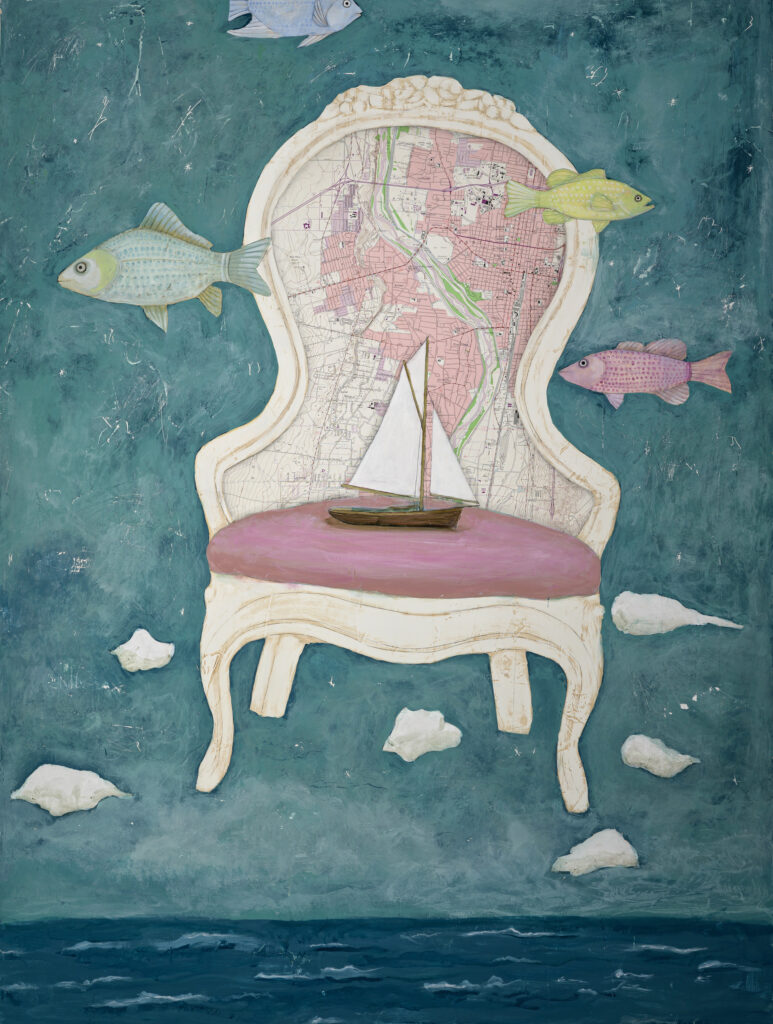
The same with the Armchair Traveller – the chair floats in the air, and so do the fish and the small boat. They all are out of place. How thrilling to not make sense but, instead, be asked to question and wonder.
Ann Korologos Gallery: Our last chat, we discussed inspirations from the illuminated manuscripts, the abstraction that came through after your Cy Twombly exhibition experience, and tapping into the place where “paradox reigns and reason is abandoned.” Some of these are themes you have explored for decades, and some are immediate inspirations. Are there any works in this exhibition that speak to these themes?
Alexandra Eldridge: Eternity’s Sunrise was painted with my freeform abstraction first. Then I ask what objects and symbols want to live with what already exists on the canvas. The vessel became very important when I began this series. It is the universal symbol of the feminine, the grail, where transformation takes place. The cockatoo is a playful bird who carries wisdom in their joy. The lily adds to the beauty. They all asked to be painted. Their interconnectedness perhaps speaks again of the function of exercising the choice of the unexpected.


